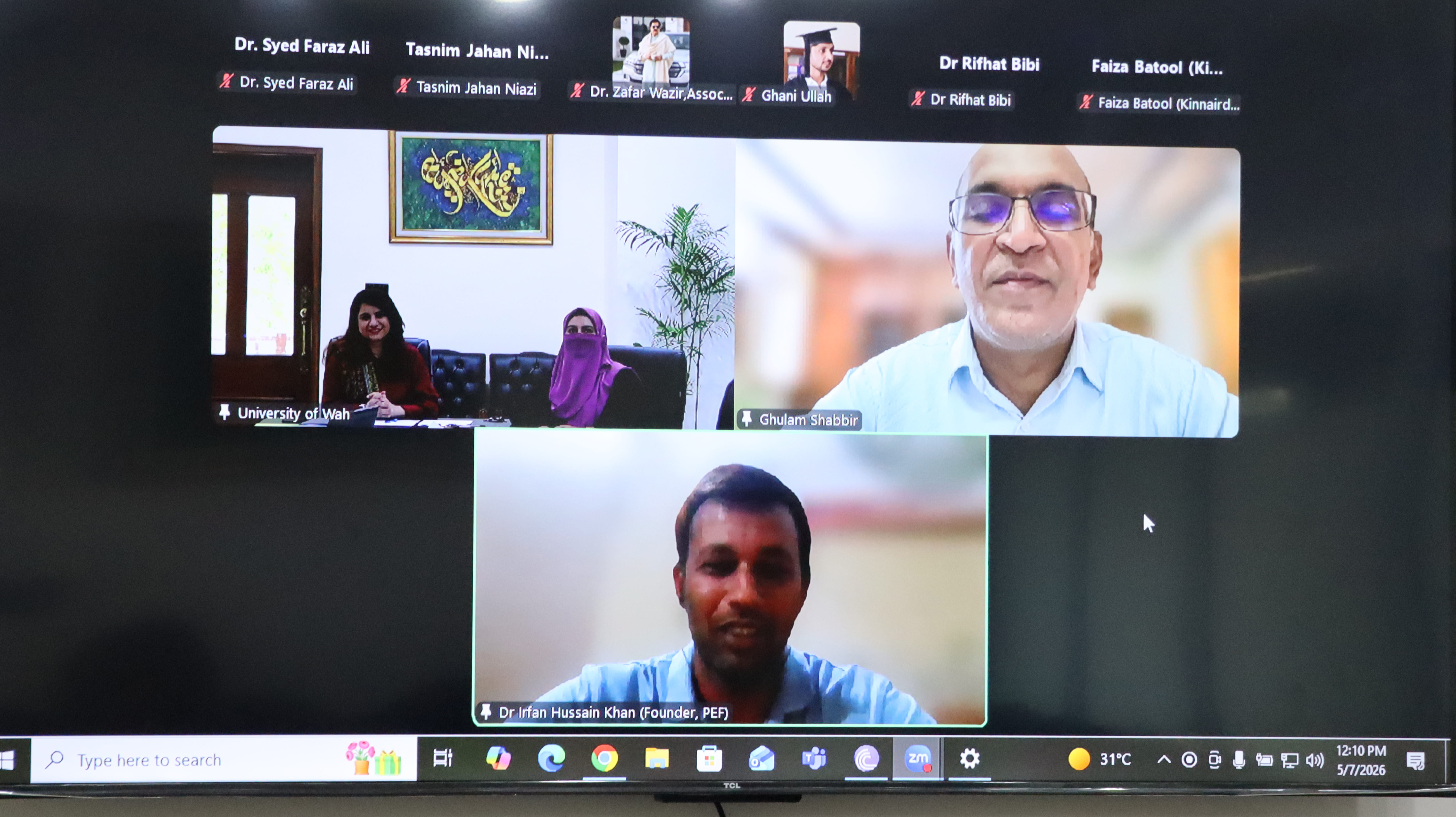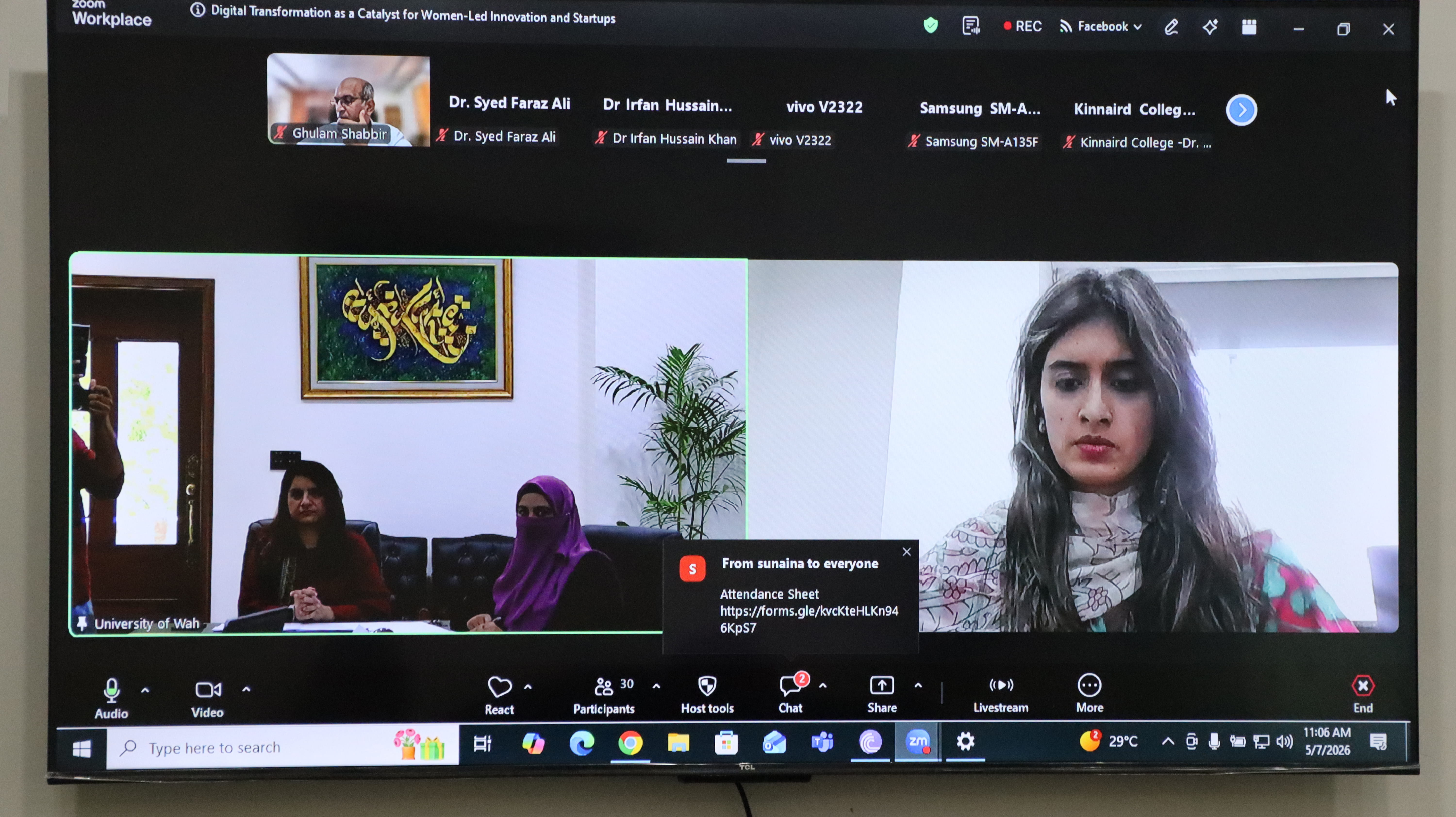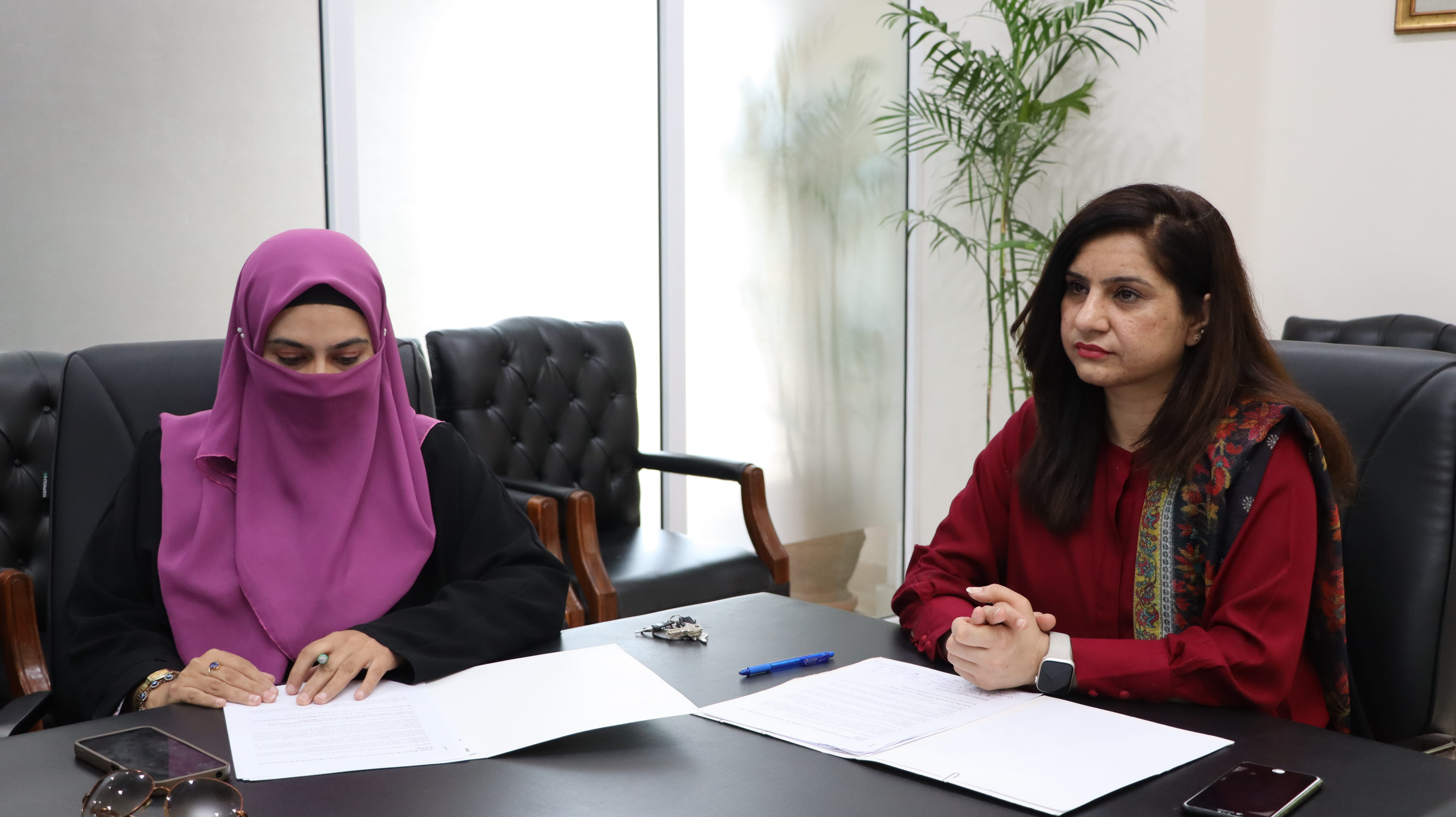
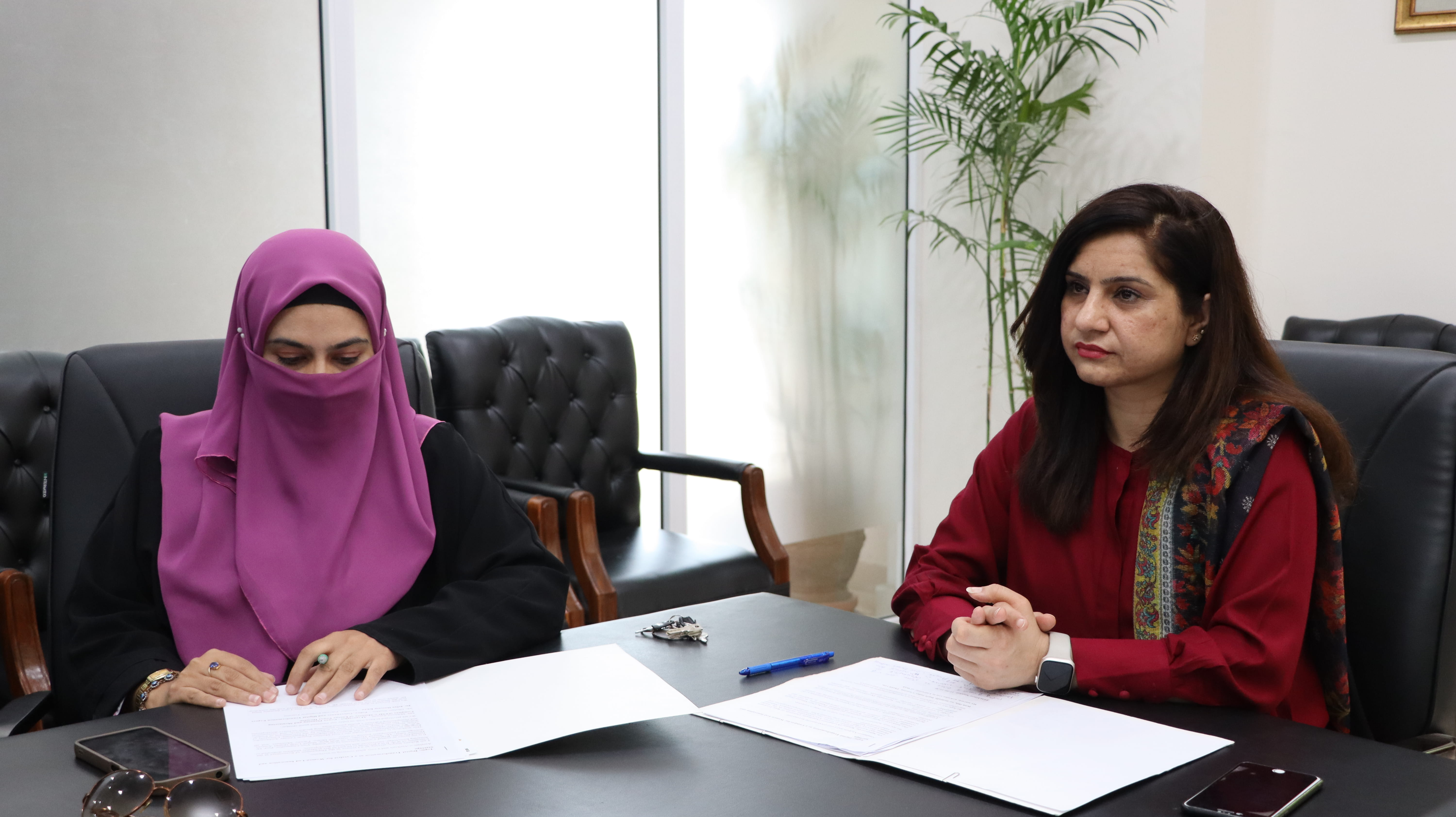
University of Wah organized a workshop titled “Digital Transformation as a Catalyst for Women-Led Innovation and Startups” on 07 May 2026 in a hybrid format. The event was held in collaboration with the Women Development Department, Government of Punjab, under the Chief Minister and the Punjab Female Ambassador Program. The initiative aimed to strengthen gender-inclusive participation in academia, innovation, entrepreneurship, and economic development.
The workshop was hosted by Dr. Asma Arif, Focal Person, Women Development Department, Punjab, along with Ms. Rehana Ali Naqvi, Lecturer, Department of Economics. It brought together academicians, researchers, students, policymakers, and professionals from across the country, with approximately 300 participants attending from various institutions and organizations.
Renowned experts and speakers included Ms. Mahnoor Salman, AI Specialist at Power Planning and Monitoring Company (PPMC), Ministry of Energy (Power Division); Mr. Ghulam Shabbir, Policy, Governance, and Digital Transformation Expert; and Dr. Irfan Hussain Khan, Founder of Pakistan Economic Frontier. During her address, Ms. Mahnoor Salman highlighted the increasing role of Artificial Intelligence in organizational transformation, emphasizing ethical AI adoption, workforce readiness, curriculum redesign, and the importance of soft skills such as communication, leadership, and critical thinking in an AI-driven economy.
Mr. Ghulam Shabbir focused on AI-driven governance, Industry 4.0, Society 5.0, and the integration of cyber-physical systems in smart cities and modern industries. He underscored the importance of collaboration between academia, industry, and government, while emphasizing mentorship, policy innovation, and women’s leadership in emerging technological domains. Dr. Irfan Hussain Khan discussed the role of the development sector in promoting women entrepreneurship and bridging the gap between academia and industry. He identified key challenges faced by women entrepreneurs and stressed the need for supportive policies, innovation ecosystems, and institutional partnerships to encourage women-led startups.
An interactive question-and-answer session followed, where participants engaged in discussions on artificial intelligence, innovation, climate resilience, renewable energy, entrepreneurship, policy development, and youth engagement in sustainable development.
In the closing remarks, the organizers expressed gratitude to the guest speakers, participants, and the Women Development Department, Government of Punjab, for their continued support. The workshop concluded with a collective commitment to advancing digital transformation, women's empowerment, innovation, and sustainable development in Pakistan through strengthened academic, policy, and industry collaboration.